Types of Seals in Alaska
Types of Seals in Alaska – Alaska’s vast coastline and icy waters are home to some of North America’s most fascinating marine mammals — and seals are among the most iconic. From rocky haul-outs to remote inlets, Alaska is one of the best places in the world to see seals in the wild.
At Ever Blue Expeditions, we guide travelers on Alaska cruises and wildlife tours that offer incredible opportunities to spot these animals up close — whether lounging on glaciers, swimming beside the ship, or resting on shoreline rocks. This guide introduces the main types of seals in Alaska, including where you’re likely to see them and what makes each one unique.
🦭 What Seals Live in Alaska?
There are three primary seal species commonly found in Alaskan waters:
-
Harbor Seal
-
Spotted Seal
-
Ribbon Seal
In addition, Alaska is home to two large seal relatives from the eared seal family:
-
Northern Fur Seal
-
Steller Sea Lion (technically a sea lion, not a true seal, but frequently seen)
🌊 1. Harbor Seal (Phoca vitulina)
Where to See Them: Glacier Bay, Kenai Fjords, Prince William Sound, Southeast Alaska
Size: Up to 6 feet long, 250 lbs
Notable For: Their dog-like faces and spotted gray coats
Harbor seals are the most common and widely distributed seal species in Alaska. They’re often seen resting on icebergs or rocky outcrops, and sometimes poke their heads above the surface to watch passing boats — earning them the nickname “sea dogs.”
They’re shy and quiet compared to sea lions but are easy to spot during a scenic cruise or kayaking excursion.
❄️ 2. Spotted Seal (Phoca largha)
Where to See Them: Bering Sea, Norton Sound, western Alaska coasts
Size: Similar to harbor seals, with slightly bulkier bodies
Notable For: Their distinct dark spots on light-colored fur
Spotted seals are closely related to harbor seals but live primarily in Arctic and sub-Arctic regions. They are more elusive, often seen on sea ice or near the mouths of remote rivers during the spring and fall.
Their thick blubber helps them thrive in icy environments, and their beautiful spotted coats make them easy to identify if you’re lucky enough to spot one.
🎀 3. Ribbon Seal (Histriophoca fasciata)
Where to See Them: Bering and Chukchi Seas
Size: Up to 6.5 feet long, 200–300 lbs
Notable For: Dramatic black-and-white “ribbon” pattern
Ribbon seals are one of the most visually striking seals in Alaska, thanks to their bold stripes and rounded heads. They’re deep-diving, ice-loving seals and rarely seen outside of remote Arctic waters.
Though uncommon on most Alaska cruises, researchers and remote travelers sometimes spot them on ice floes in far western Alaska.
🦁 4. Northern Fur Seal (Callorhinus ursinus)
Where to See Them: Pribilof Islands, Aleutian Islands
Size: Males up to 7 feet and 600 lbs; females much smaller
Notable For: Dense fur and long flippers
While not a “true seal,” northern fur seals are an important part of Alaska’s marine ecosystem. They’re fast swimmers, agile on land, and have dense fur that nearly led to their extinction due to overhunting in the 19th century.
Today, they can be seen in large colonies on the Pribilof Islands, a key stop for travelers on specialized Arctic and wildlife-focused cruises.
🪨 5. Steller Sea Lion (Eumetopias jubatus)
Where to See Them: Southeast Alaska, Gulf of Alaska, Kodiak Island
Size: Males up to 11 feet and 2,500 lbs
Notable For: Loud vocalizations and social group behavior
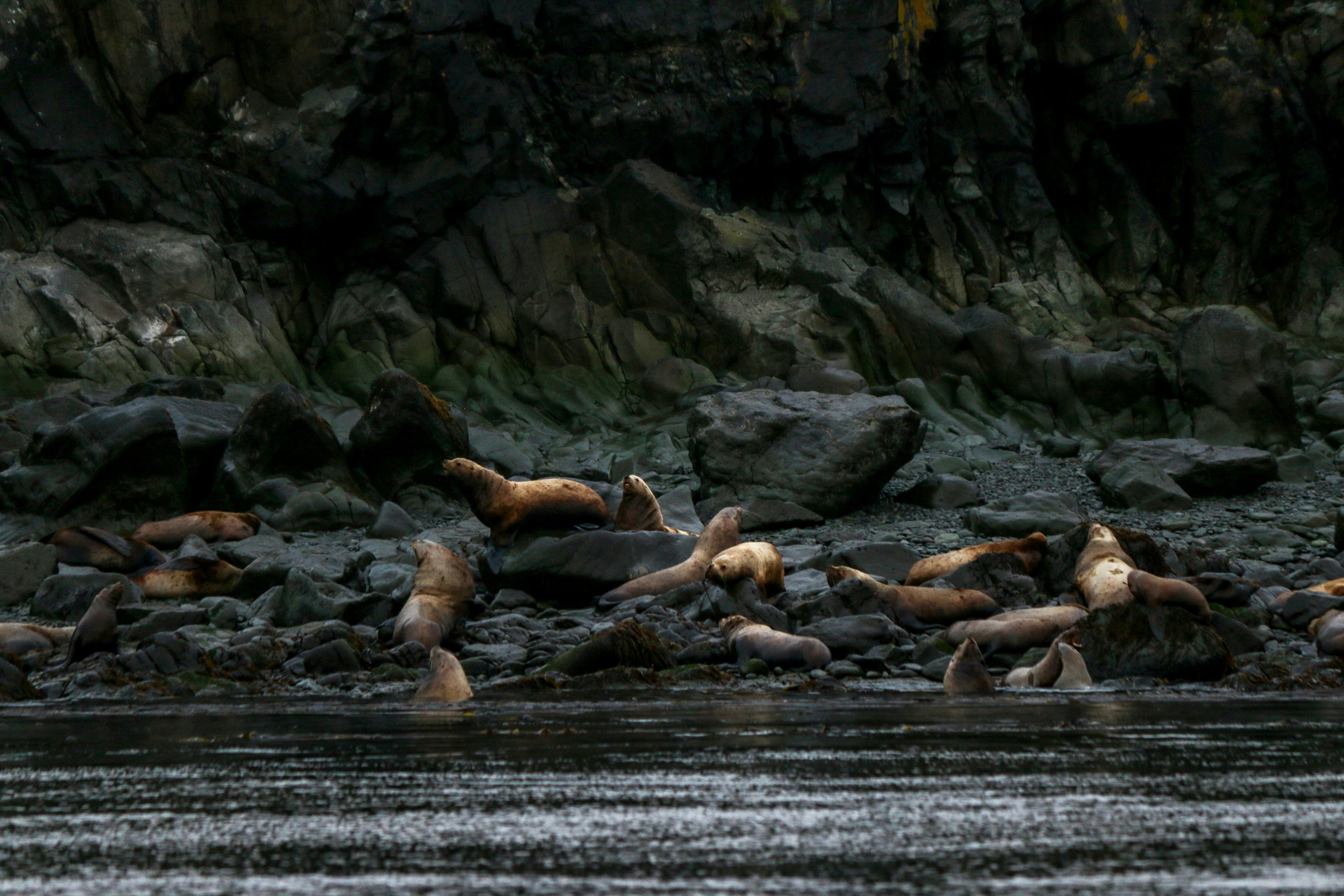
While technically a sea lion, the Steller sea lion is often confused with seals by casual observers. These massive animals are frequently seen hauled out in noisy groups on rocky shores or sea stacks.
You’ll likely spot (and hear) them during a cruise through Kenai Fjords National Park or Glacier Bay. They’re known for being more social and vocal than seals, and their size is truly impressive.
🛥️ Best Way to See Seals in Alaska
The best way to see Alaska’s seals is on a small-ship expedition or coastal cruise with expert guides. Whether you’re watching harbor seals bask on glacial ice or hearing sea lions roar from across the bay, these moments are unforgettable.
At Ever Blue Expeditions, we customize itineraries based on your wildlife interests — including cruises through Alaska’s seal-rich regions like the Inside Passage, Prince William Sound, and the Aleutian chain.
❓ People Also Ask: Alaska Seals
🤔 What types of seals live in Alaska?
Alaska is home to harbor seals, spotted seals, ribbon seals, and fur seals. Sea lions like the Steller sea lion are also commonly seen.
📍 Where is the best place to see seals in Alaska?
Top spots include Glacier Bay, Kenai Fjords, the Pribilof Islands, and Prince William Sound.
🔍 What is the most common seal in Alaska?
The harbor seal is the most widespread and frequently seen species across Alaska’s coastal regions.
🧊 Are seals dangerous to humans?
No, seals are generally shy and avoid human contact. Observing them from a respectful distance is safe and encouraged.