Types of Seals in Antarctica
Types of Seals in Antarctica – Antarctica is one of the last wild frontiers on Earth — and it’s home to some of the most fascinating seals on the planet. These resilient marine mammals thrive in extreme cold, icy waters, and remote pack ice. Whether you’re planning an expedition cruise or simply curious about the wildlife of the Southern Ocean, getting to know the seals of Antarctica adds a whole new layer to your polar experience.
At Ever Blue Expeditions, we specialize in small-ship Antarctic voyages where guests often encounter these seals up close — sometimes just feet away during Zodiac excursions or ice landings. Here’s your guide to the 6 main types of Antarctic seals, and where you’re most likely to see them.
What Types of Seals Live in Antarctica?
There are six true seal species found in and around Antarctica. These include:
-
Weddell Seal
-
Crabeater Seal
-
Leopard Seal
-
Ross Seal
-
Elephant Seal
-
Fur Seal (technically not a true seal, but commonly seen in sub-Antarctic regions)
Each species plays a unique role in the polar ecosystem and has fascinating adaptations for life in the coldest waters on Earth.
1. Weddell Seal
Where to See Them: Along the Antarctic coast, near ice floes and breathing holes
Size: Up to 10 feet long, 1,000 lbs
Notable For: Their deep diving and haunting vocalizations
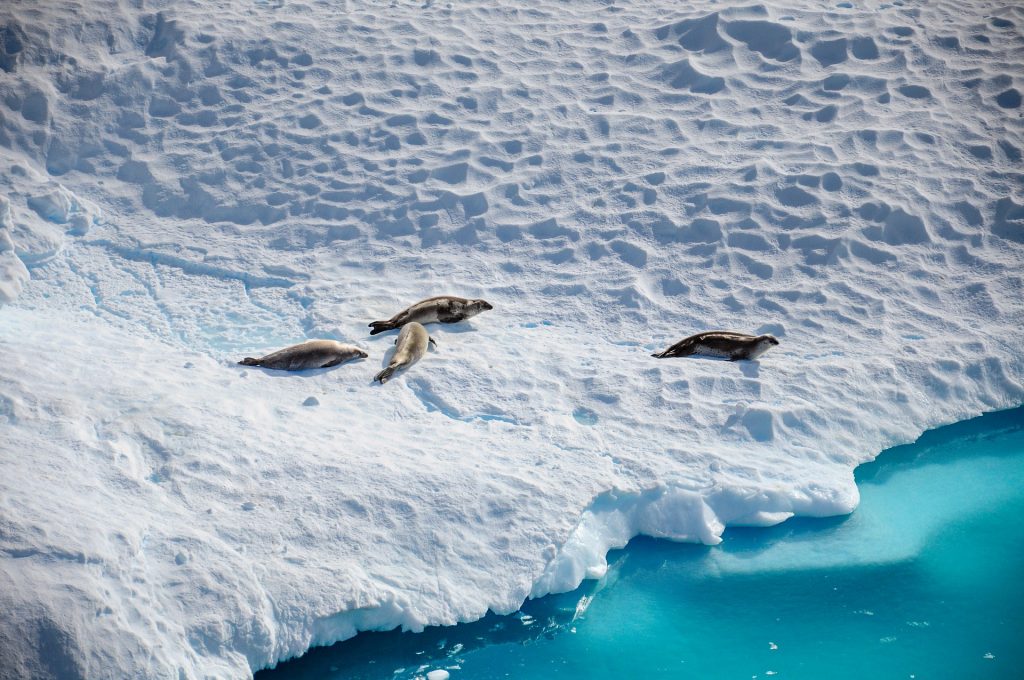
Weddell seals are often seen lounging on sea ice. They’re among the southernmost breeding mammals on Earth and are famous for their ability to dive over 600 meters deep and stay underwater for nearly an hour.
2. Crabeater Seal
Where to See Them: Pack ice zones and floating icebergs
Size: 7–8 feet long, 500–600 lbs
Notable For: Being the most abundant seal in the world
Despite the name, crabeater seals don’t eat crabs — they feed almost exclusively on Antarctic krill, using finely adapted teeth to filter them from seawater. You’ll likely see these curious seals during Zodiac cruises around ice fields.
3. Leopard Seal
Where to See Them: Coastal ice edges, near penguin colonies
Size: Up to 12 feet long, over 1,000 lbs
Notable For: Their reptilian appearance and apex predator behavior
Leopard seals are top predators in Antarctic waters. With powerful jaws and sleek, torpedo-like bodies, they prey on penguins, fish, and even other seals. Though intimidating, they’re a highlight for photographers and wildlife lovers.
4. Ross Seal
Where to See Them: Deep in the pack ice; rarely near the Antarctic Peninsula
Size: 6–8 feet long, ~400 lbs
Notable For: Their elusive nature and strange, warbling calls
Ross seals are the rarest and least studied of Antarctica’s seals. Spotting one is a special moment — these seals are solitary, secretive, and usually found far from ship routes.
5. Elephant Seal
Where to See Them: Sub-Antarctic islands like South Georgia
Size: Males up to 20 feet long, 8,000 lbs
Notable For: Their size and loud, trumpet-like bellows
Southern elephant seals are the largest seals on Earth. Males are enormous and engage in dramatic battles during mating season. While they don’t breed on mainland Antarctica, you’ll encounter them on expeditions that include South Georgia Island.
6. Antarctic Fur Seal
Where to See Them: South Georgia and other sub-Antarctic islands
Size: 4–6 feet long, up to 400 lbs
Notable For: Thick fur and playful personalities
Technically part of the eared seal family, fur seals aren’t “true seals,” but they’re commonly seen on Antarctic voyages. They were once hunted extensively for their dense coats but have rebounded in protected regions.
Best Way to See Antarctic Seals in the Wild
The best way to see seals in Antarctica is on a small-ship expedition cruise with experienced guides and daily Zodiac landings. These trips maximize wildlife encounters while minimizing environmental impact.
At Ever Blue Expeditions, we work with top-rated polar operators and custom-match travelers with itineraries based on what you want to see — whether it’s seal colonies, penguin rookeries, or remote ice shelves.
People Also Ask: Antarctic Seals
Are there seals in Antarctica?
Yes — Antarctica is home to six main species of seals, including the Weddell, crabeater, and leopard seal.
What is the largest seal in Antarctica?
The southern elephant seal is the largest, with adult males weighing up to 8,000 lbs.
Which seal is most common in Antarctica?
The crabeater seal is the most numerous, with an estimated population of over 15 million.
Can you see seals on an Antarctic cruise?
Absolutely. Most Antarctic cruises include opportunities to see multiple species of seals in their natural habitat, especially around the Antarctic Peninsula and sub-Antarctic islands.